Your Child Isn’t an Algorithm: What AI Can and Can’t Tell You About Sleep
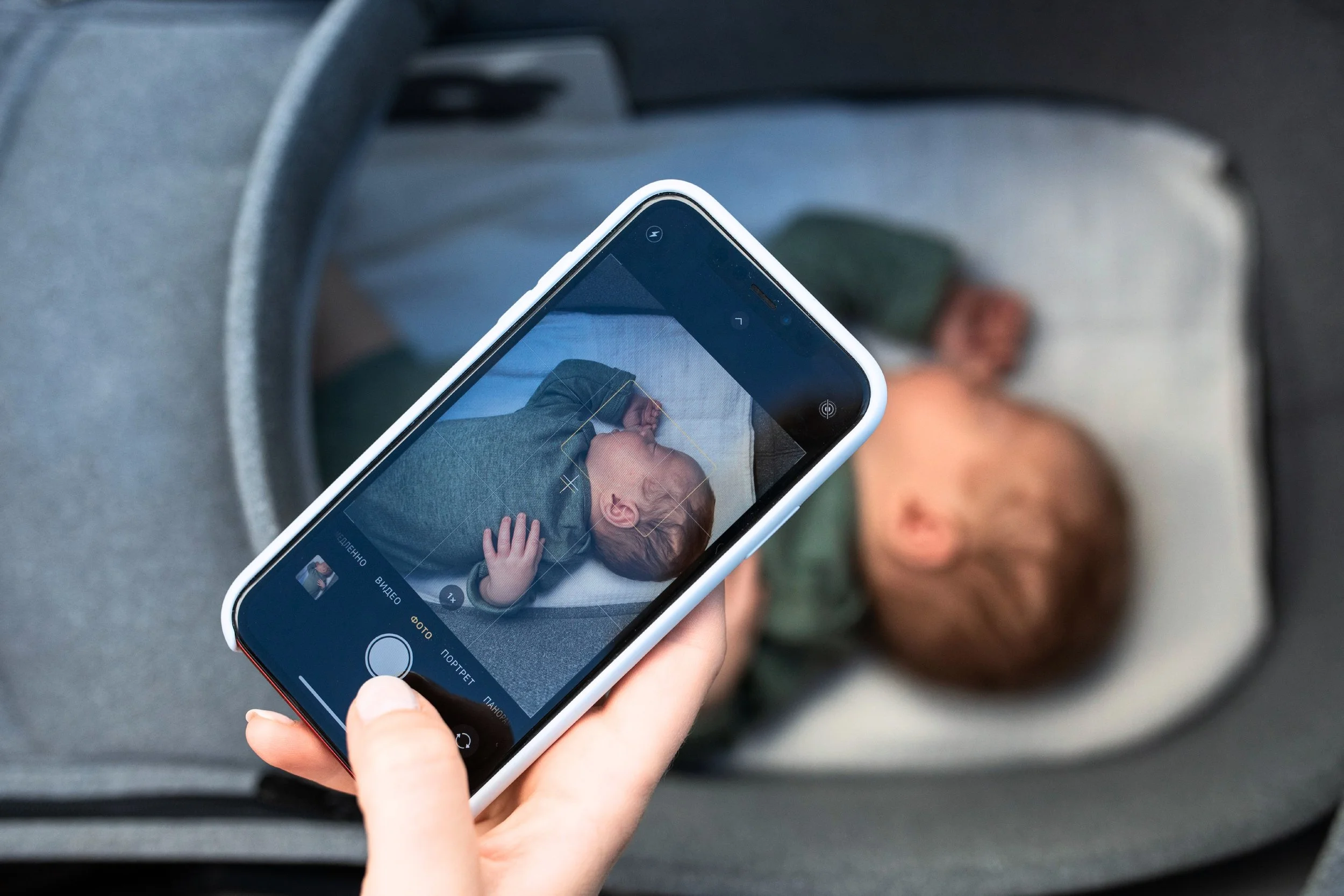
AI parenting tools are having a real moment right now. Baby trackers that layer in machine learning, smart monitors that flag breathing and movement patterns, wake-window and sleep regression predictors, chatbots that answer your burning questions any time of the day or night.
And, honestly, it makes sense that exhausted parents are so interested in these tools.
When you’re overwhelmed, totally burnt out, and desperate for less decision fatigue, a tool that promises to look at your child’s sleep and tell you what to do next can sound pretty incredible.
With all the interest in these tools right now, it felt worth it to take a real look at what they're good at, where they hit a wall, and what that means when you're trying to figure out your child's sleep.
Where AI Parenting Tools Actually Help
Let's start with giving credit where it's due.
While the use of AI in general is increasingly controversial, I think it’s important to consider all the facts. Dismissing a tool outright because of where the broader conversation around AI sits doesn’t actually tell a parent whether it’s useful for their specific situation, and neither does blind trust in whatever response it happens to generate for your questions in the moment. Both of those reactions skip the same critical step: actually looking at what the tool is doing, and whether it’s the kind of help you need right now.
AI is genuinely great at pattern tracking. It can call out the patterns in what you've already been logging about your child’s day and hand you back the general shape of it: your baby's woken between 4 and 5am for the last four days, their longest wake window before a nap has been around 2 hours and 25 minutes over the last two weeks.
Real talk though, that's just math.
It's your own data, handed back to you, run through a calculator instead of a sleep-deprived brain.
And if you're already logging feeds, wake times, and naps in the first place, having something surface the pattern for you saves some real mental energy. A predicted wake window based on two weeks of data can be a decent starting point for planning your day. And walking into a fifteen-minute pediatrician appointment with organized data, instead of trying to dig it out of memory while bouncing a baby on your hip, can genuinely make that conversation go smoother.
That has real value. I'm not going to pretend it doesn’t.
Where AI Sleep Advice Hits A Wall
Where these tools break down is the moment you ask them to translate that pattern into a solution, because that means explaining “why” the challenges around sleep are happening in the first place.
Unfortunately, they can’t provide a personalized, practical, real-world fix to the rough naps, tricky wake windows, false starts, frequent night wakes, or early mornings you might be seeing, because they never had the true full picture in the first place.
Genetics, temperament, neurodivergence, sensory differences, nervous system regulation, health, development, individual sleep needs, feeding, nutrition, activity, environment, routines, relationship, family dynamics, and mental health are all potential pieces of a child's sleep puzzle.
The root cause for ongoing sleep challenges is rarely just one of these. It's usually a few working together. And an app can't reliably account for all of them, much less understand how they might be interacting together.
Why Your Baby’s Sleep Can’t Be Reduced to a Schedule
When a child is waking frequently, routine timing is only one piece of the bigger picture. An important one, but still just one.
Maybe new teeth are coming in, or a new developmental skill has them practicing at all hours. They may have a nervous system that is especially sensitive to sounds, shifts in light, or changes in temperature.
Their temperament may mean they simply need more support to settle than another child does.
A growth spurt might mean they are genuinely hungrier than usual, or a low-key day might mean they just haven’t built up enough sleep pressure to sleep a longer stretch. Separation anxiety can enter the picture too, especially after weaning, starting daycare, a parent returning to work, a move, or a change in sleep space.
And sometimes, frequent waking is a sign that there is something else going on that deserves a closer look, a “red flag” worth bringing to a skilled medical provider rather than an app.
Why AI Sleep Schedules Aren’t Always “Personalized”
The algorithm doesn't know the difference.
It does not, and cannot, see the real child behind the wake times. It can recognize patterns in the data, but it can’t reliably determine what those patterns mean without the broader context.
That means an AI-generated “personalized” routine can still be based on a very incomplete picture. The recommendation you get back may be tailored to your child’s logged wake times and naps, but that doesn't mean it understands your child’s unique needs, temperament, development, environment, or what may actually be driving the sleep challenges.
And that is where things can get tricky. A recommendation can sound thoughtful, specific, and confident while still totally missing the actual problem.
This matters more than it might seem, because it's exactly where a lot of parents start to feel like they're failing. The app says the wake window was right. The bedtime routine matched the recommendation. So when the night still falls apart, it's easy to internalize that as a personal or parenting failure, when really the tool just wasn't built to see all the pieces that actually mattered.
Your Child Isn’t Failing the App
When the recommendations keep missing the mark,it’s understandable to start wondering what you’re doing wrong or what you’re missing. This is where something that started as a helpful tool can easily become another source of pressure.
The real problem may simply be that these apps are asking your individual child to fit inside a set of averages that were never designed to account for their specific needs in the first place. It can tell you what is common, but common does not necessarily mean “right” for your baby.
And when your baby doesn’t line up with what the app says they “should” be doing, it’s easy to keep chasing the numbers. You adjust the wake window, cap the nap, move bedtime, second-guess feeds, watch the clock a little more closely, and hope the next tweak will finally make everything click.
Sometimes, the most helpful thing you can do is step back from the numbers and look at your child.
The Data Matters. But It’s Not the Whole Story.
None of this means these tools aren’t worth using in the right circumstances. It means understanding them for what they are: one small bit of input, not the full story.
The data can tell you what happened last night. But understanding why it happened, and what to do about it, takes a much bigger picture.
It takes someone who knows your baby, understands your values and goals, considers your family’s unique context, knows what you’ve already tried, and understands what matters to you both now and in the long term. It takes an understanding of sleep biology, temperament, development, and all the other pieces that can shape a child’s sleep.
That is what allows a skilled sleep coach to look beyond what’s happening on the surface, identify the factors that may be contributing to the challenge, and bring all of those pieces together into a truly cohesive, personalized plan that actually makes sense for your child and your family.
Stop Throwing Darts With Your Eyes Closed
I often explain this to parents using the visual of throwing darts with your eyes closed.
When sleep feels unsustainable or has completely gone off the rails, it’s easy to get lost in a sea of random recommendations.
Cap the nap. Let them nap longer. Move bedtime earlier. Push it later. Drop a feed or night wean entirely. “Try this.” “Stop doing that.”
Before long, all you’re doing is throwing darts with your eyes closed, trying one thing after another and hoping something sticks.
A skilled sleep coach helps un-muddy the waters. They help you step away from the endless cycle of internet advice and understand what is actually happening for your child, so the changes you make are intentional rather than just another guess.
It means you can finally throw those darts with your eyes open. Instead of constantly guessing and second-guessing yourself, you can feel confident that the changes you’re making, whether they’re big or small, are intentional, purposeful, and matched to your child, your family, and your values and goals.
Because when you’re exhausted, you deserve more than another generic recommendation or one-size-fits-all solution. You deserve real support, real answers, and a plan that was created with your child and your family in mind.
How to Use AI and Baby Sleep Trackers Without Letting Them Take Over
This doesn’t necessarily mean you need to stop using AI or sleep-tracking tools altogether. There is nothing inherently wrong with tracking your child’s sleep, feeds, or wake times. In the right circumstances, that information can be genuinely useful.
The question is what you’re using it for.
Typically, we track sleep because we want to understand what’s happening and use that information to guide a change. If tracking is helping you see some patterns, take some of the mental load off, or give you useful information to bring to your pediatrician or sleep coach, great. Let it do that job.
But if tracking has started to feel anxiety-inducing, overwhelming, or all-consuming, or if you find yourself constantly trying to make your baby fit the recommendations and still genuinely struggling, it is completely okay to put the app down.
You already know these tools are working from patterns and data, not the full picture of your individual child. They're useful for showing you what's happening, but they cannot tell you whether what is typical is actually what your individual child needs.
And if tracking is feeling genuinely useful to you, keep using it. Just remember what it is giving you: information based on patterns and averages, not a complete, personalized plan for your child.
You know your baby. The app doesn’t. The numbers are information. They are not the whole story.
And a data point should never make you doubt what you are seeing, hearing, and feeling in the child right in front of you.
That's the piece no algorithm has caught up to yet, and honestly, it’s the one that matters most.
You Deserve More Than Just Another Algorithm
If you’re at the point where you’re more tired than curious, you feel like you’ve reached the end of the internet after reading enough “tips” to make your head spin, or you’re ready to throw those darts with your eyes open, you don’t need another generic answer.
You might just need someone to look at your child.
Someone to sit down with you, hear the whole story, and help you untangle all the pieces you’ve been trying to make sense of on your own. What’s actually going on? What might be contributing to it? What’s worth changing? And what can you finally stop second-guessing?
That’s what we can start talking through on a free Discovery Call. Bring me the messy nights, the things you’ve tried, the questions you keep circling back to, and all the things you’re not even sure are relevant. We’ll slow it down, look at the bigger picture, and start figuring out where to focus.
Because you don’t need another algorithm telling you what your baby should be doing. You deserve someone who can actually listen to what’s happening in your home and help you make sense of it.
About the Author
Court Wright is a Certified Family Sleep Coach and the founder of Kind and Rested, a sleep coaching practice supporting families across the US with a holistic, evidence-informed approach to early childhood and family sleep.